
Last updated: October 2026
Quick answer
LVP is warmer, quieter and usually faster and less expensive to install. Tile is harder, more permanent and better in showers and the wettest zones. In a Eugene home many owners choose both: tile at the back door and shower, LVP in kitchens and main living areas. The right pick depends on the room, the subfloor and how long you plan to stay.
Different strengths, not a winner-take-all contest
Comparisons that crown one floor the best are rarely helpful, because rooms do different jobs. Tile and LVP both handle water, both come in wood and stone looks and both have loyal fans. They differ on feel, installation, lifespan and what they ask of the structure underneath. The fairest way to choose is to take each room and ask what it will face.
Comfort and warmth underfoot
Tile is hard, dense and cold. In a Willamette Valley winter, a bathroom or kitchen tile floor feels chilly without in-floor heat, and dropped dishes rarely survive. LVP is softer and slightly warmer, particularly with an attached pad, and it deadens footsteps better. Anyone who stands for long periods in a kitchen, or has joint problems, tends to prefer LVP. Tile fans appreciate the solid, permanent feel and the way it keeps a room cool in summer.
Water performance
Porcelain tile is effectively waterproof, and with a proper membrane and sealed grout it makes the best surface for a shower or wet room. LVP is water-resistant to waterproof at the surface, but the edges and seams of a floating floor are not designed for standing water, and water below the planks can stay trapped. For splashes, spills and tracked-in rain, either works. For floors that could flood, tile is the more forgiving choice.
Durability and lifespan
- Tile: can last decades if the substrate is stable. Grout may need cleaning, sealing or eventual renewal, and a heavy drop can chip or crack a tile.
- LVP: quality products often last a long time, but the wear layer can scratch or scuff and cannot be refinished. Individual planks can be replaced.
- Both: are only as good as the subfloor. Movement or moisture ruins either floor early.
Installation and subfloor demands
Tile asks more of the base. It needs a stiff, flat substrate, often with cement board or an uncoupling membrane over wood framing, because flexing cracks tiles and grout. Installation takes longer, involves mortar, grout and curing time, and generates more mess. LVP floats over a flat surface, requires less depth and can usually be installed in a day or two in a typical room, which also means less disruption in an occupied home.
Height matters, too. Tile plus mortar and backer can raise a floor by half an inch or more and may require trimming doors, adjusting appliances and rebuilding transitions. LVP is thinner and easier to blend with neighboring rooms. Our tile page and LVP page describe each process in detail.
Cost
Using typical national ranges, installed LVP often falls near $4 to $12 per square foot, while installed tile commonly ranges from about $8 to $30. Those are broad figures for budgeting, not Eugene Flooring quotes; see the cost guide for how they were framed and what shifts them. Tile usually costs more because of the labor and prep, although a basic ceramic on a ready floor can narrow the gap.
Room-by-room suggestions
- Showers and tub surrounds: tile with a waterproofing membrane.
- Mudrooms and entries: porcelain tile or heavy-wear LVP.
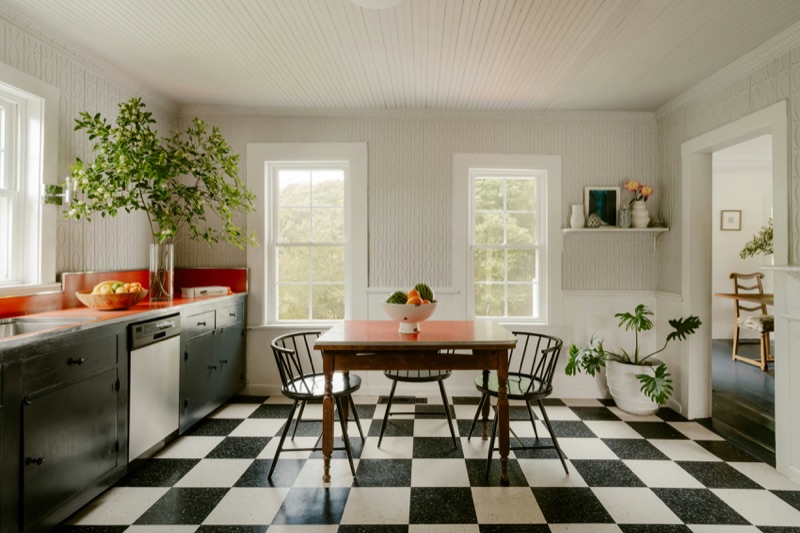
- Kitchens: LVP for comfort, tile for permanence; many owners choose either.
- Bathrooms: tile at the wet zones, LVP in a half bath or powder room.
- Living rooms and hallways: LVP, because of warmth and speed of install.
Not sure? Ask us to bring samples to the free estimate, or call (541) 781-8025. You can also compare against laminate or read how the valley's wet climate shapes the decision.
One last practical point: whichever way you lean, ask to see a sample of each in your own kitchen light. Colors, sheen and texture change dramatically between a showroom and a rainy February afternoon.
Frequently asked questions
Which is better in a bathroom, LVP or tile?
Tile is generally better in and around showers, while LVP can work well on dry bathroom floors with sealed edges.
Is tile more expensive than LVP?
Typically, yes, because installation takes longer and needs more prep, though ranges overlap.
Can LVP and tile be used in the same house?
Yes. Many homes use tile in wet zones and LVP elsewhere, with a planned transition between them.
Keep reading
Ready to talk about your project? Call or text (541) 781-8025, Monday to Saturday, 7:00 AM to 8:00 PM, or use the free quote form.
Call (541) 781-8025