Last updated: October 2026
Quick answer
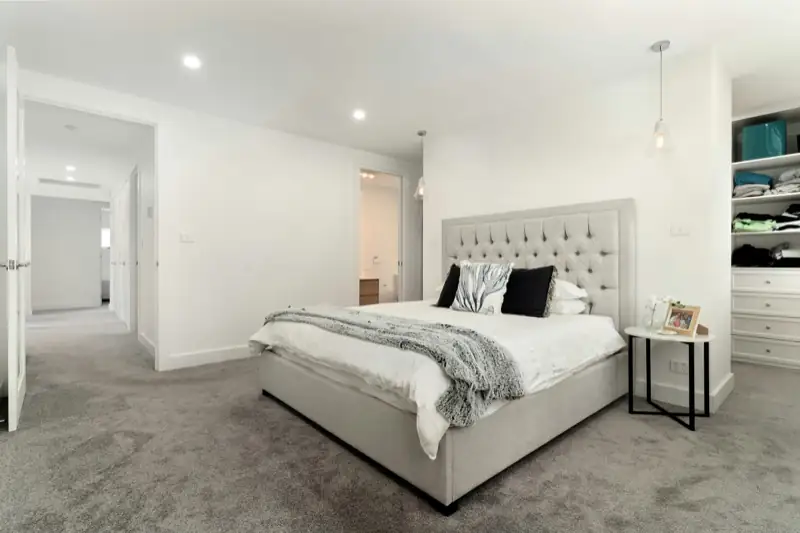
Carpet is still the warmest, quietest and most forgiving floor for bedrooms, living rooms and stairs, which counts for a lot through a gray Eugene winter. Eugene Flooring installs plush, textured and looped carpet with a pad matched to the room, and treats seams, stretching and stair work as craft rather than an afterthought.
Why people in the Willamette Valley still choose carpet
A long wet season keeps people indoors and barefoot, and a cold slab or hardwood floor feels cold from October to April. Carpet insulates a little, absorbs sound between floors and gives a soft landing for children and older family members. For bedrooms, home offices above living areas and basement family rooms it remains a very hard-to-beat combination of comfort and cost.
The other reason is price. Per square foot, carpet and pad are usually less expensive to buy and to install than hard surfaces, which helps when you are covering a whole upper story. The carpet versus LVP for bedrooms guide weighs the two honestly, including the cases where we would steer you toward vinyl instead.
Fiber, construction and pile: reading a carpet sample
Carpet is described by its fiber and its construction. Nylon is resilient and holds its shape in traffic; polyester feels soft and takes color well, though it can crush sooner; triexta and some solution-dyed fibers resist stains well. Wool is a natural option that sits at the premium end. The construction describes how the fiber is arranged: cut-pile styles such as plush and Saxony feel luxurious, while loop styles such as berber are tougher and show fewer footprints.
Density matters at least as much as the name on the label. A thick, tightly packed carpet of modest fiber often outlasts a loose, fluffy one of a better fiber. Bend a corner of the sample backward: the more backing you can see, the lower the density. Ask about the twist level too, since a tighter twist resists untwisting in hallways and on stairs.
The pad is half the floor
A good pad extends the life of carpet, softens each step and adds some thermal and sound insulation. Pads are measured by thickness and density, and the right pairing depends on the carpet: many manufacturers specify a pad no thicker than a half inch, and a dense pad under a loop carpet keeps it from rippling. Over concrete slabs, the choice of pad is also a moisture question, which is why we check the slab before recommending one.
- Bedrooms: a medium-density, cushioned pad is a good starting point for comfort.
- Stairs and hallways: a firmer, denser pad keeps the carpet from flexing and wearing at the edges.
- Basements and slab rooms: a moisture-aware pad and a quick slab check come first.
- Rooms with pets: stain-resistant fibers and a pad with a protective barrier are worth discussing.
Installation: stretching, seams and stairs
Wall-to-wall carpet is stretched over tack strips fastened around the perimeter of each room. Without proper power stretching, carpet develops ripples and wrinkles within months. Seams are joined with heat-activated tape and should be placed away from the main traffic line and sunny windows wherever the room layout allows. We plan the seams on paper before cutting, because the direction of the pile has to match on both sides.
Stairs deserve a separate conversation. The carpet is wrapped over each nosing and tucked into the back of the tread, so measurements are more complicated than the room next to them. Waterfall installations, where one length flows over the nose, look clean but use more material than the cap-and-riser method. Either way, a solid subfloor and tight fasteners prevent squeaks.
What happens to your old carpet and subfloor
Removal of the old carpet and pad is a scoped item in the estimate. Underneath, we look for staples, adhesive residue, stained plywood and any sign of past leaks or pet accidents that have soaked through to the subfloor. Odors that survive a carpet change nearly always come from the pad or the wood beneath, so sealing or replacing damaged material is worth doing before new carpet is laid.
Keeping new carpet looking new
Vacuum regularly and more often along the main walking lines, treat spills by blotting rather than rubbing, and follow the cleaning method on the manufacturer's care sheet, since some warranties require periodic hot-water extraction. Entry mats and a no-shoes habit protect the carpet through Oregon's wet months. For where the project fits in a bigger plan, see how a flooring job runs from estimate to walkthrough or look at the Willamette Valley wet-climate guide.
What a proper carpet installation standard looks like
The Carpet and Rug Institute publishes CRI 105, the standard for residential carpet installation, and most carpet manufacturers' warranties expect it to be followed. For homeowners, the practical points are:
- Power stretching in every room except small closets. A knee-kicker alone cannot tension wall-to-wall carpet properly, and under-stretched carpet ripples within months, especially through damp Willamette Valley winters.
- Seam planning: seams placed out of main traffic paths and away from direct window light where possible, running the same direction as the light, with seam edges sealed so they do not fray.
- Pad matched to the carpet: the manufacturer's pad thickness and density limits matter. Too thick or too soft a pad lets the backing flex and can void the warranty.
- Moving and protecting the room: clear agreements on who moves furniture, how old carpet and pad are disposed of, and how doors are trimmed if the new carpet sits higher.
Ask any installer whether they power stretch and follow CRI 105. It is a quick question that separates careful crews from fast ones.
Carpet on stairs: waterfall or Hollywood?
Stairs get the most wear in the house, and there are two main ways to carpet them. A waterfall (or cascade) install runs the carpet over the stair nose and straight down to the next tread. It is quicker and usually costs less. A Hollywood (also called cap-and-band or upholstered) install wraps and tucks the carpet tightly under each nose, which looks tailored and shows the shape of each step. Hollywood takes more time and suits dense, lower-pile carpets best. Either way, stairs need a firm pad and careful attachment, since a loose stair carpet is a safety issue, not just a cosmetic one.
Frequently asked questions
How long does carpet last?
Quality, density, traffic and care all affect lifespan. A dense carpet over a good pad in a low-traffic bedroom can stay in good shape much longer than the same carpet on a busy staircase.
Can you carpet over a concrete slab?
Yes, with a moisture check first and a suitable pad. Slabs that hold moisture need a different approach, and we explain options at the estimate.
Will the carpet smell after installation?
New carpet can have a mild odor that fades with ventilation over a few days. Ask us about low-emission product lines if anyone in your home is sensitive.
Do you remove and dispose of the old carpet?
Removal can be included in the scope. Confirm it at the estimate so there are no surprises on the day.
Do you install carpet on stairs?
Yes. Stairs need careful pattern and pad choices and secure tack strips; we measure them separately during the in-home estimate.
What is power stretching and do I need it?
Power stretching uses a long lever stretcher to tension carpet wall to wall before it is hooked onto the tack strip. The CRI 105 installation standard calls for it in most rooms, and it is what stops new carpet from rippling and wrinkling over time.
What is the difference between waterfall and Hollywood stair carpet?
Waterfall runs the carpet over each stair nose and straight down to the next tread. Hollywood wraps and tucks the carpet under each nose for a tailored look. Hollywood takes longer and suits dense, lower-pile carpets.
Carpeting bedrooms in Springfield? The Springfield flooring page covers local homes and scheduling. Questions about timing and furniture are answered in the flooring FAQ.
Keep reading
Ready to talk about your project? Call or text (541) 781-8025, Monday to Saturday, 7:00 AM to 8:00 PM, or use the free quote form.
Call (541) 781-8025