Last updated: October 2026
Quick answer
Epoxy flooring turns a dusty, stained concrete slab into a seamless, easy-clean surface that resists oil, tire marks and chemicals. In Eugene the key questions are moisture and preparation: winter damp can rise through slabs, so Eugene Flooring grinds the concrete, checks moisture and chooses a system that will bond and stay bonded.
What an epoxy floor is
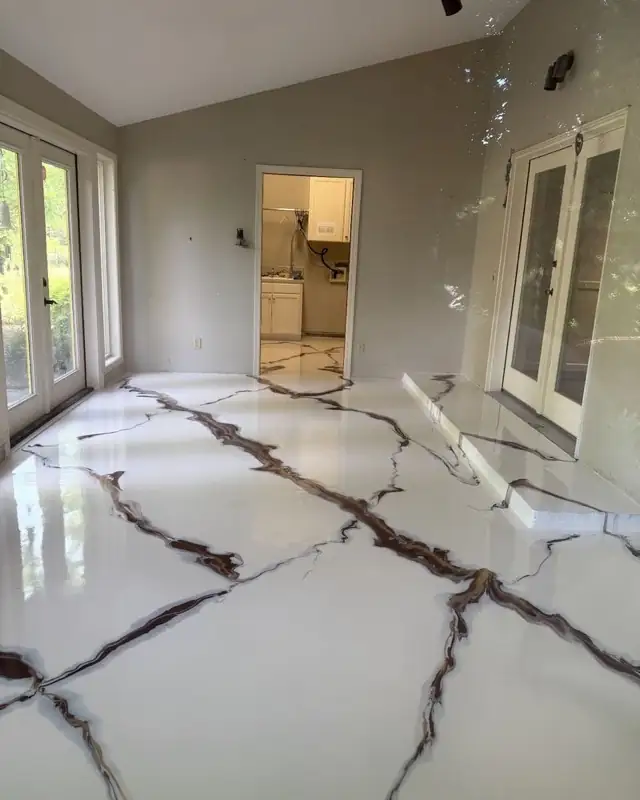
Epoxy is a two-part resin system: a resin and a hardener are mixed on site, rolled onto prepared concrete and chemically cure into a hard, plastic-like film. Depending on the system, the finished floor can be a solid color, a speckled flake blend, a metallic swirl or a clear coat over stained concrete. It is used in home garages, basements, laundry rooms, workshops, retail back rooms and light industrial spaces.
Compared with bare concrete, a coated floor does not dust, does not soak up oil and is much easier to clean. Compared with garage-floor paint or a roll-on kit from a hardware store, a professionally installed system is thicker, bonds to a mechanically ground surface and is usually finished with a tougher clear topcoat. The difference between the two approaches is the subject of our epoxy versus garage floor paint guide.
Why moisture decides everything in the Willamette Valley
Concrete is porous. In western Oregon, long wet seasons, high groundwater in some neighborhoods and slabs poured without a good vapor barrier can all lead to water vapor moving upward through the concrete. Under a sealed coating, that vapor builds pressure and can push the film off the slab, leaving blisters or peeling patches. This is the most common reason that coatings fail here, and it is why we test before we quote a coating as appropriate.
Typical screening includes a taped-down plastic sheet test as a quick check, calcium chloride testing or in-slab relative humidity probes for a more reliable reading, and a visual walk-around for efflorescence, stains and damp patches along walls. If readings are high, options include a moisture-mitigating primer, waiting for drier months or choosing a breathable product. In some slabs, the honest advice is not to coat them at all. We would rather tell you than put down a floor that fails.
How we install an epoxy floor
- Diamond grinding. The slab is ground with a planetary grinder connected to a dust extractor, which removes laitance and old sealers and opens the pores so the resin can grip.
- Repair. Cracks, joints, divots and spalls are cleaned and filled with a repair compound suited to epoxy.
- Prime. A penetrating primer or moisture-tolerant primer goes down first, matched to the slab's test readings.
- Base coat and decorative layer. A pigmented epoxy base is rolled out; flakes are broadcast into it, or the chosen decorative effect is added.
- Topcoat. One or two clear coats seal the system. Garages often get a urethane or polyaspartic-type topcoat for abrasion resistance and color stability.
- Cure and walkthrough. We give written timings for foot traffic and for returning vehicles, then walk the floor with you.
Picking a finish for your space
Flake finishes, in which colored vinyl chips are broadcast into the wet base, are the favorite for garages because the pattern hides dirt and adds grip. Solid-color systems are clean and economical, a good fit for basements, laundry rooms and shops. Metallic finishes use pearlescent pigments for a marbled gloss and are most often chosen for showpiece garages and finished basements. A clear coat over stained or dyed concrete suits those who like the look of the slab itself.
Slip resistance deserves a thought in any space that gets wet. Bare, glossy epoxy can be slick underfoot when rain is tracked in, so an added aggregate in the topcoat or a textured flake can make the floor safer at the door and by the car's wet tires. Mention it at the estimate and we will recommend a texture level.
Care, limits and expectations
Sweep, then damp-mop with a mild cleaner and avoid harsh solvents. Keep jack stands from point-loading the floor by placing a pad underneath, and wipe up brake fluid and battery acid promptly. Hot tires from long drives can lift weak coatings; a well-prepared floor with a hard topcoat is designed to withstand them. No coating is indestructible, and cure times, temperature and humidity at installation all affect results. For related guidance, see the prep and warranty guide, the cost guide and the wet-climate guide.
Frequently asked questions
How long does an epoxy garage floor take?
A typical two-car garage is often prepared and coated over about two days, with an additional cure period before cars return. We confirm the schedule in writing.
Will epoxy peel from my garage slab?
Peeling usually traces to poor preparation or moisture vapor from the slab. Grinding and moisture testing before coating are the best protection.
Can you coat a basement floor?
Often yes, once moisture readings and drainage are checked. Basements with active water entry need the source corrected first.
Is epoxy slippery when wet?
A smooth glossy topcoat can be. Flakes or an anti-slip additive add texture, and we recommend them for wet-entry garages.
Planning more than the garage? See all flooring installation services in Eugene, or the Eugene flooring cost guide for labeled national ranges.
Keep reading
Ready to talk about your project? Call or text (541) 781-8025, Monday to Saturday, 7:00 AM to 8:00 PM, or use the free quote form.
Call (541) 781-8025